THE MOVING FORM
Lillemor Mannerheim and the Organic Language of Modern Ceramics
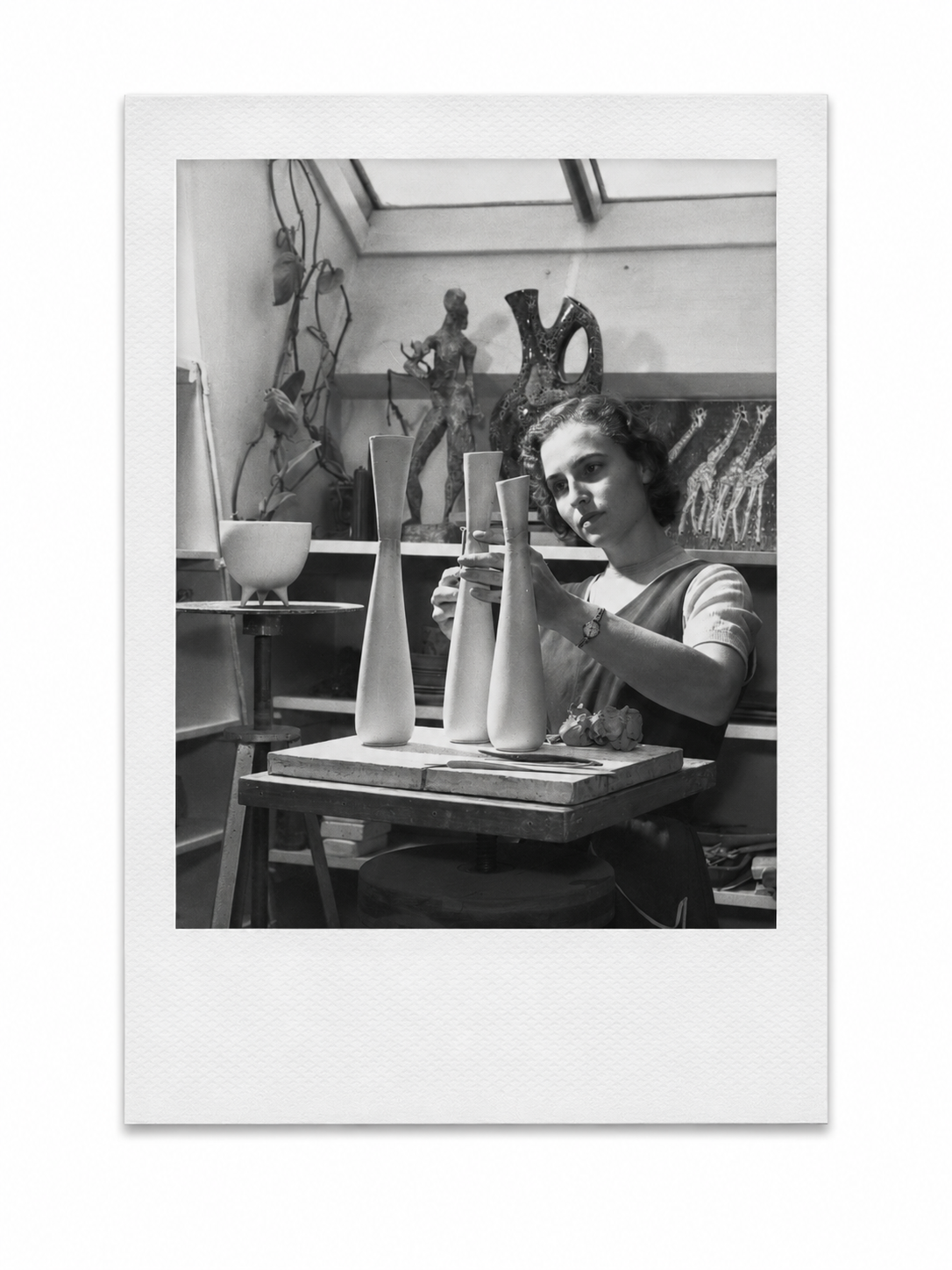
Organic, asymmetrical and often distinctly sculptural, Lillemor Mannerheim’s ceramics rarely settle into a single view. Rims rise and fall, openings shift away from the centre, and silhouettes change as an object is turned. Across vessels, tableware and animal sculpture, she returned to a deceptively simple idea: that a static object could contain movement.
From Finland to Stockholm
Ingeborg Aina Sophie Constance Mannerheim was born in Vichtis, Finland, in 1927 and spent her early childhood at Niemenkylä, the family farm some sixty kilometres from Helsinki. Animals were part of this landscape from the beginning. She drew them as a child, particularly horses, and would return to them throughout her life. The name Lillemor, given to her by her younger brother, was later adopted professionally.
In 1945, Mannerheim moved to Stockholm to study ceramics at Konstfack. During the summers of 1946 and 1947 she worked in the art department at Arabia in Helsinki, where she encountered artists including Birger Kaipiainen, who became a lifelong friend. After graduating in 1949, she joined Gefle Porslinsfabrik in Gävle, part of the Upsala-Ekeby group.
Learning to See in the Round
Mannerheim left Gefle for Paris in 1950. At the Académie de la Grande Chaumière, she studied sculpture under Ossip Zadkine, whose teaching approached the human body as something that could be transformed towards abstraction. The shift from ceramics to sculpture would prove significant.
In 1951, she continued her training at the Manufacture nationale de Sèvres, where trial models were cast from several of her designs. When she returned to Gefle in 1952, some of the models subsequently introduced by the factory developed from work she had begun there.
What Mannerheim brought back was not simply a new vocabulary of shapes. Sculpture had introduced another way of thinking about the object itself: not as a surface or profile, but as a volume occupying space. That distinction would become central to her work.
The “Moving Forms”
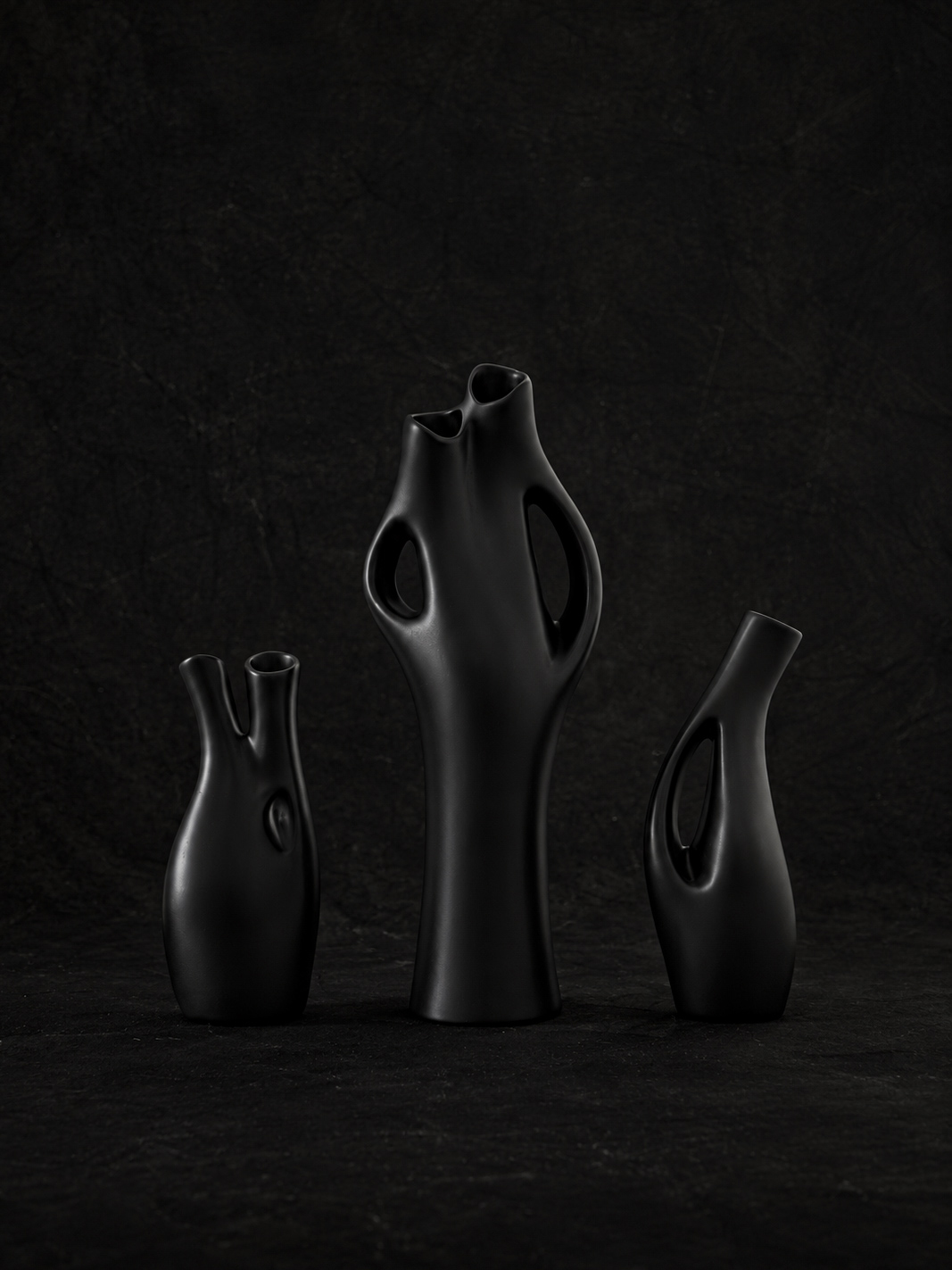
Between 1952 and 1957, Mannerheim entered the most productive period of her career. At Gefle, she worked across tableware, vessels and sculpture. Alongside patterns such as Solros and Västkust, she began developing organic, lightly asymmetrical bowls and vases that she described as rörliga former — “moving forms.” The phrase contains a small paradox. Ceramics do not move.
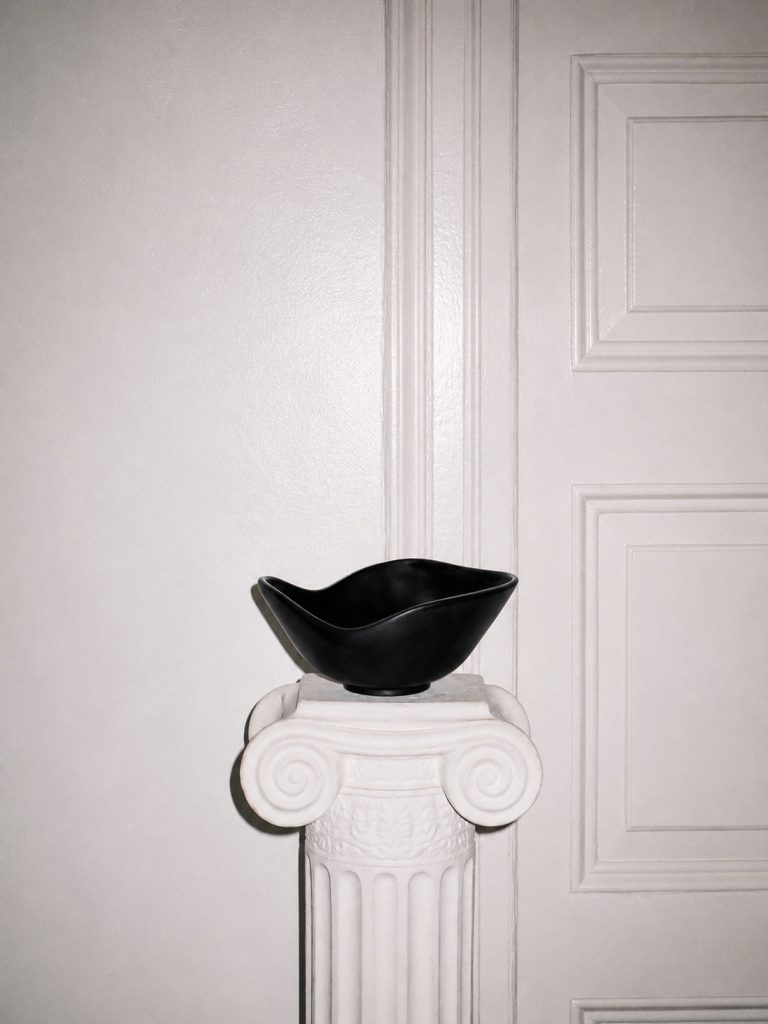
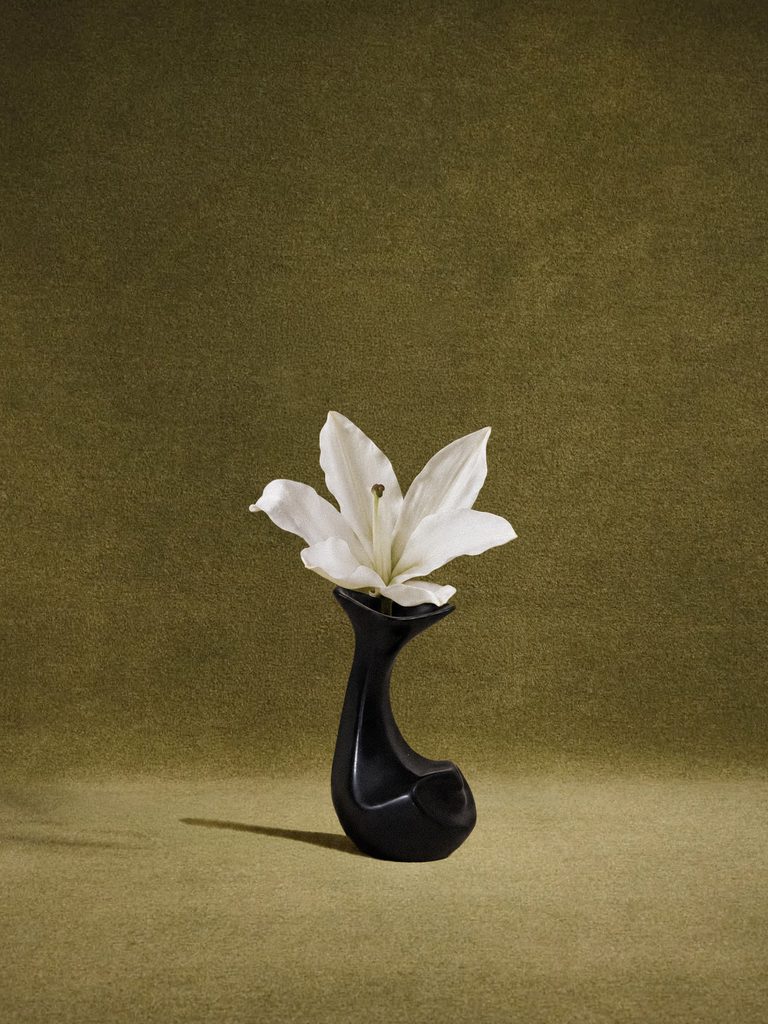
Mannerheim’s forms do something subtler. A rim rises on one side and falls on another. An opening sits slightly away from the centre. Volume gathers unevenly around the body. Seen from one direction, a vessel may appear almost symmetrical; turned slightly, its balance changes. Movement belongs not to the object itself, but to the experience of looking at it.
The idea found its clearest expression in the M-Serie, produced at Gefle during the mid-1950s. Its bowls, pitchers and vases range from gently irregular forms to objects in which asymmetry determines almost the entire silhouette.
Many were finished in Mangania, a dark glaze developed at Gefle by factory engineer Arvid Nordbye. On these objects, decoration becomes secondary. The dark surface draws attention instead to contour: the rise of an edge, the compression of a body, the point at which one curve passes into another.
They were products of a factory, but their forms resist the visual certainty associated with repetition. No single viewpoint quite explains them.
From Vessels to Animals
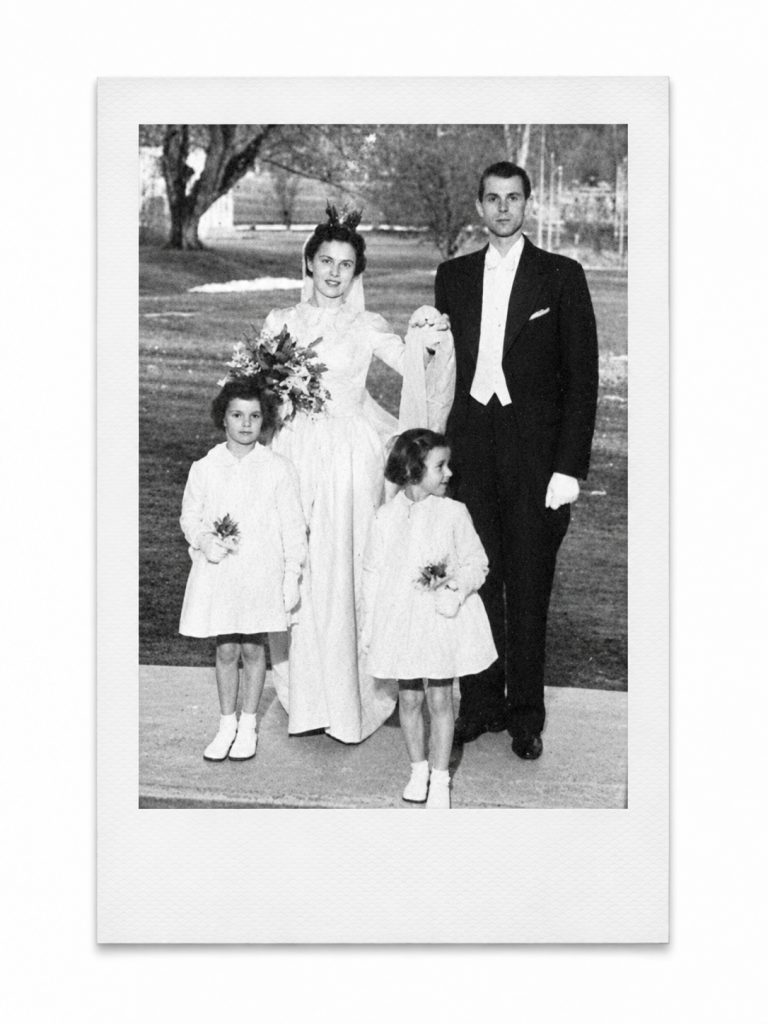
Mannerheim left Gefle in 1957 following her marriage to Carl-Gustaf Klingspor and settled at Hellekis säteri on Kinnekulle in Västergötland. She established a studio there and continued to work independently, including commissions for Hovmantorps glasbruk, Rörstrand and Nässjö Stolfabrik.
Animals became increasingly prominent in her work. At first glance, the naturalism of a horse or bird might seem far removed from the abstraction of the M-Serie. Yet the two bodies of work are connected by the same concern: how a form occupies space.
A vessel changes as it is turned. So does an animal. A raised head, curved back or shift in weight alters the silhouette from one viewpoint to the next. Mannerheim’s animal sculptures often depend less on surface detail than on these relationships between mass, contour and balance.
The subject was also deeply familiar. She had drawn animals at Niemenkylä as a child; decades later, they remained a way of studying form through observation.
Looking at Nature
Mannerheim travelled extensively in her later years, from the Galápagos Islands and East Africa to Antarctica and Nepal. What had begun as an artistic interest in animals gradually intersected with questions of conservation.
During a visit to Tibet in 1974, she met the 14th Dalai Lama and later became involved with organisations concerned with Tibet, including the Tibet Committee’s work surrounding his visit to Sweden in 1988.
In 1984, she returned to Arabia with De hotade (The Endangered), a series depicting endangered animals including pandas, penguins and koalas. The sculptures were sold in support of WWF. The project brought Mannerheim back to the factory where she had worked as a student almost four decades earlier.
There is a continuity here that extends beyond subject matter. Nature had never functioned simply as a collection of motifs in Mannerheim’s work. It offered another model for making forms: bodies that are rarely perfectly symmetrical, whose balance depends on irregularity and whose appearance changes with position.

Nature as Structure
Mannerheim’s work is represented in Swedish museum collections, including Röhsska Museum and Länsmuseet Gävleborg. Exhibitions devoted to her “moving forms” have more recently returned attention to a body of work that sits between sculpture, ceramics and industrial design.
Her ceramics rarely announce their complexity. Much of it resides in small decisions: where a curve begins, where a rim rises, where weight appears to gather.
Perhaps this is what Mannerheim recognised in nature. Symmetry need not mean equivalence, and stillness need not mean the absence of movement. Her objects do not reproduce nature. They behave according to some of the same rules.
Sources and Further Reading
Jönsson, Love. “(Lillemor) Ingeborg Aina Sophie Constance Mannerheim.” Svenskt kvinnobiografiskt lexikon (SKBL), 2021.
Principal biographical source for Mannerheim’s childhood, studies at Konstfack, periods at Arabia, employment at Gefle Porslinsfabrik, studies under Ossip Zadkine, work at Sèvres, rörliga former, Solros and Västkust, Hellekis, later commissions and travels, her meeting with the Dalai Lama, De hotade and museum representation.
Langenskiöld, Susanne G. & Jönsson, Love (eds.). Handen och känslan: Lillemor Mannerheims liv och konstnärskap. Stockholm: Bokförlaget Max Ström, 2019.
Principal published monograph on Mannerheim’s life and work.
KWUM – Karin Widnäs Museum. Lillemor Mannerheim – Rörliga Former. Exhibition material.
Biographical and exhibition material relating to Mannerheim’s ceramic practice; documents De hotade as an Arabia series from 1984 and identifies subjects including pandas, penguins and koalas.
Röhsska Museum, Gothenburg. Museum collection records.
Works by Lillemor Mannerheim in the museum collection.
Länsmuseet Gävleborg, Gävle. Museum collection records.
Works by Lillemor Mannerheim in the museum collection.
Gefle / Upsala-Ekeby reference literature.
Documentation relating to Gefle production, the M-Serie and Mangania, the black glaze developed by factory engineer Arvid Nordbye.